
Prof. Nicolaos A. Cutululis |
Nicolaos A. Cutululis is a Professor in the Department of Wind and Energy Systems at the Technical University of Denmark. He holds a M.Sc. (1998) and a Ph.D (2005) in Automatic Control. His main research area is operation and integration of wind power moving towards 100% RES power systems, with a special focus on offshore wind and HVDC. He has authored/co-authored extensively in his research field. He serves as a Chief Editor of the Wind Energy Science journal. He has served as scientific director in the DTU TotalEnergies Excellence Center of Clean Energy (DTEC). He is active in shaping the wind and power research agenda at the European level, having been an MB member of EERA JP Wind and an Ex-co member for ETIPWind; he has also co-chaired the SET Plan IWG, drafting the first Implementation Plan for HVDC. Currently, he is chairing the Steering Committee of the Energy Islands Forum. |
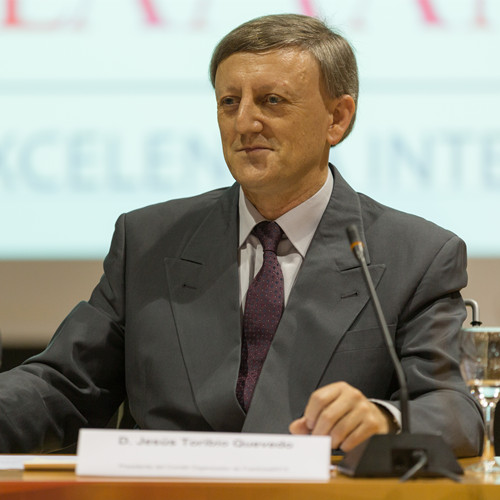
Prof. Jesús Toribio |
Professor Jesús Toribio graduated in Civil Engineering in 1982 and then in Mathematics in 1986. In 1987 he was awarded his PhD in the Polytechnic University of Madrid (UPM) and turned into Associate Professor in that Institution. In 1992 he became Full Professor and Head of the Materials Science Department of the University of La Coruña (at the age of 32, thus being the youngest Full Professor in the area of Materials Science in Spain). In 2000 he moved to the University of Salamanca (USAL) where is currently Full Professor of Materials Science & Engineering and Head of the Fracture & Structural Integrity Research Group (FSIRG) of that Institution. |
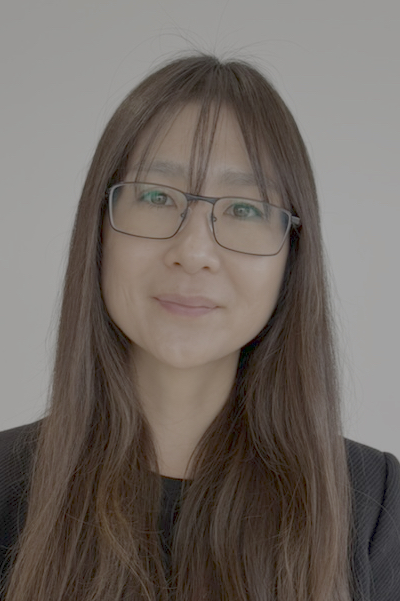
Assoc. Prof. Mamiko Inamori |
Mamiko Inamori was born in Kagoshima, Japan in 1982. She received her B.E., M.E., and Ph.D. degrees in electronics engineering from Keio University, Japan in 2005, 2007, and 2009, respectively. In 2009, she joined Keio University as an assistant professor. In 2013, she joined Faculty of Engineering, Tokai University, where she is now an associate professor. She received the Young Scientist Award from Ericsson Japan in 2010. Her research interests are mainly concentrated on wireless power transfer and signal processing in wireless communication system. |
Assoc. Prof. Daigo Yonetsu |
Daigo
Yonetsu completed the course requirements of the
latter half of the doctoral program in
engineering at the Graduate School of
Engineering of Kansai University in 2003, and
then became a research associate in the Faculty
of Engineering. He became a lecturer in the
Faculty of Engineering Science of the same
university in 2007. He became an associate
professor in the Faculty of Engineering Science
of the same university in 2015. He holds a
D.Eng. degree and is engaged in research on
optimal design simulations of electrical
equipment, electric field optimal design
simulations of electric power equipment and
optimal design of cable size for economy and
environment. He received a 2007 IEIEJ Paper
Encouragement Award, and a 2020 IEIEJ Academic
Encouragement Award. He is a member of IEEE,
IEIEJ, IEEJ, the Japan Society for Simulation
Technology, and JSAEM. |

Prof. Kwan San Oscar Hui |
Kwan San
Oscar Hui is a Full Professor of Mechanical
Engineering at Prince Mohammad Bin Fahd
University, Saudi Arabia. He previously held
academic appointments at the University of East
Anglia, UK (Lecturer, 2016–2019; Reader,
2019–2024), Hanyang University, South Korea
(Assistant Professor, 2013–2016), and City
University of Hong Kong (Lecturer, 2008–2013).
He obtained his PhD in Mechanical Engineering
from the Hong Kong University of Science and
Technology in 2008. |

Assoc. Prof. Kwun Nam Hui |
Kwun Nam
Hui is an Associate Professor at the Institute
of Applied Physics and Materials Engineering
(IAPME), University of Macau. He received his
PhD in Electrical and Electronic Engineering
from the University of Hong Kong in 2009 and
held academic appointments at Pusan National
University before joining the University of
Macau in 2015. Dr. Hui research focuses on
advanced electrode and catalytic materials for
energy storage and conversion, including
lithium–sulfur, potassium-ion, sodium-ion, and
aluminum-ion batteries, as well as
supercapacitors and electrocatalytic systems
(ORR, OER, HER, CO₂RR, NRR). His group combines
nanostructure design, lattice/strain
engineering, molecular dynamics, and DFT
calculations to accelerate charge transfer and
reveal fundamental reaction mechanisms. |

Assoc. Prof. Sinan Küfeoğlu |
Sinan
Küfeoğlu is working as an Associate Professor at the University of Vaasa, Finland. He worked as a Senior Policy Manager at the Office of Gas and Electricity Markets (Ofgem), HM Government. Previously, he worked at the University of Oxford, the University of Cambridge, and University College London. He led the research collaboration between Cambridge and the European Bank for Reconstruction and Development (EBRD) in developing recommendations to enhance the digital resilience of critical infrastructure. He was an adviser at the United Nations Institute for Training and Research (UNITAR) for integrating the United Nations Sustainable Development Goals into university education. He provided consultancy to the World Bank in the field of applying machine learning to electric power systems. His research interests include energy futures, sustainable development, energy economics, and technology policy. |

Dr. Anushree Ramanath |
Dr.
Anushree Ramanath is a technology executive and
product leader based in the San Francisco Bay
Area, United States, where she heads Software
Products and Analytics at a clean energy and
sustainability company. She leads five
cross-functional teams building data-driven
platforms for EV charging, fleet operations,
solar, and battery storage, focusing on applying
AI, analytics, and scalable software
architecture to solve complex energy challenges.
She holds a PhD in Electrical and Computer
Engineering and has authored several
publications, including book chapters published
by Elsevier and Wiley. She is an invited speaker
at conferences worldwide and has received
several accolades for her technical research and
contributions to the field. |